From Blueprint To First Case: The Operating Room Build Timeline


Building an operating room requires careful planning, strict safety standards, and close coordination between clinical, design, and construction teams. Unlike a standard renovation, an OR must support infection control, surgical workflow, medical gases, lighting, imaging, power systems, and emergency access. A clear timeline helps healthcare leaders manage cost, reduce delays, and prepare the space for safe patient care.
Planning and Needs Assessment
The process begins with defining the purpose of the operating room. A hospital may need a general surgery suite, orthopedic OR, hybrid OR, or specialty room for outpatient procedures. Clinical leaders should identify expected case volume, equipment needs, staffing patterns, storage requirements, and patient flow. Early input from surgeons, nurses, anesthesia teams, infection prevention staff, and facilities managers helps prevent costly design changes later. This stage also includes budget planning, regulatory review, and early schedule development.
Design and Engineering
After goals are defined, architects and engineers create the room layout and technical plans. This phase covers wall placement, sterile zones, HVAC design, lighting, ceiling booms, medical gas lines, electrical systems, and technology integration.
Operating rooms require precise airflow, temperature control, and surface materials that support cleaning and infection prevention. Design teams must also account for equipment placement so staff can move safely and efficiently during procedures. Many healthcare projects use digital planning tools common across construction management software industries to track documents, approvals, timelines, and changes.
Permits, Procurement, and Site Preparation
Before construction begins, teams must secure permits and order long-lead materials. Specialized equipment, surgical lights, booms, imaging systems, and HVAC components may require significant lead time. Site preparation may involve demolition, utility relocation, temporary barriers, infection control measures, and safety planning. If construction occurs inside an active healthcare facility, teams must limit disruption to patients, staff, and nearby departments.
Construction and Installation
Construction includes framing, mechanical systems, electrical work, plumbing, wall finishes, flooring, ceilings, and equipment installation. Each step must meet healthcare construction standards and project specifications. Inspections often occur throughout the process to confirm that systems are installed correctly. Coordination is critical because delays in one trade can affect the entire schedule.
Testing, Training, and Final Approval
Before the OR can open, systems must be tested and validated. Airflow, pressure relationships, lighting, power, medical gases, alarms, and equipment must perform as required. Staff training is also essential. Surgical teams need to understand room layout, equipment placement, safety procedures, and emergency protocols.
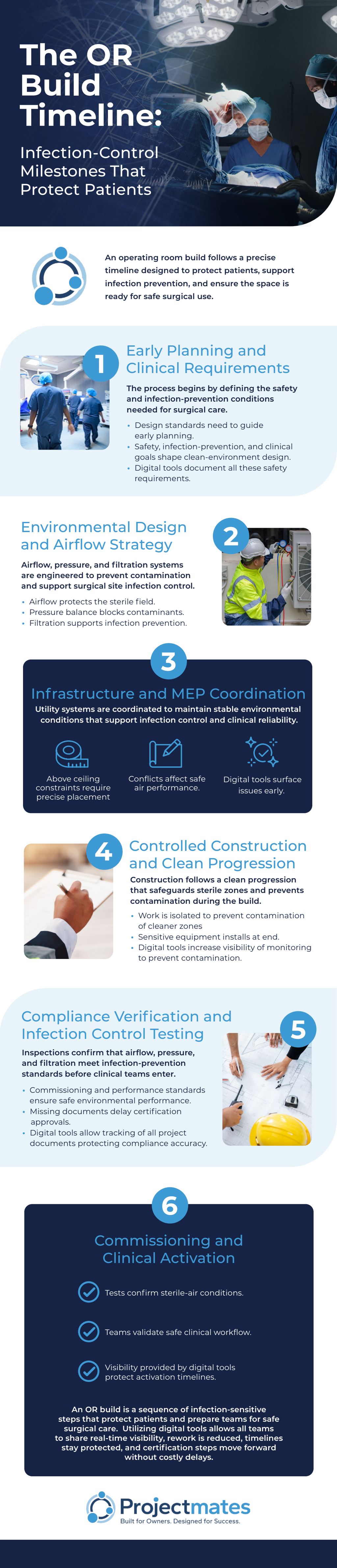
A successful operating room build depends on disciplined planning from the first assessment through final approval. Healthcare organizations that invest time in clear requirements, coordinated design, careful construction, and thorough testing are better prepared to open safe, efficient surgical spaces. Look over the infographic below for more information.