
Whiplash Recovery: What To Expect And How To Support Healing


Whiplash is one of the most common injuries following vehicle collisions, sports impacts, and other sudden accidents. The condition occurs when the neck is forced to move rapidly back and forth, placing stress on muscles, ligaments, tendons, and other soft tissues. Symptoms may appear immediately or develop over the next several hours or days, making early evaluation important even if the injury initially seems minor.
Recognize the Common Symptoms
Neck pain and stiffness are the most recognizable signs of whiplash, but the condition can affect more than the neck alone. Some people experience headaches that begin near the base of the skull, shoulder pain, reduced range of motion, dizziness, or tingling in the arms.
Fatigue and difficulty concentrating may also occur, particularly after more significant injuries. Because these symptoms can overlap with other medical conditions, a healthcare provider should evaluate anyone who develops persistent pain or neurological symptoms after an accident. Seeking medical attention promptly also helps identify more serious injuries that may require additional testing or treatment.
Early Treatment Can Improve Recovery
Most cases of whiplash improve with conservative care. During the first few days, healthcare providers may recommend rest, ice, and over-the-counter or prescription pain medication to reduce discomfort and inflammation.
As pain begins to improve, gentle movement is often encouraged. Remaining completely inactive for long periods may contribute to stiffness and slower recovery. Physical therapy is commonly recommended to restore flexibility, strengthen neck muscles, and improve posture. Following the treatment plan provided by a healthcare professional gives injured tissues the best opportunity to heal properly.
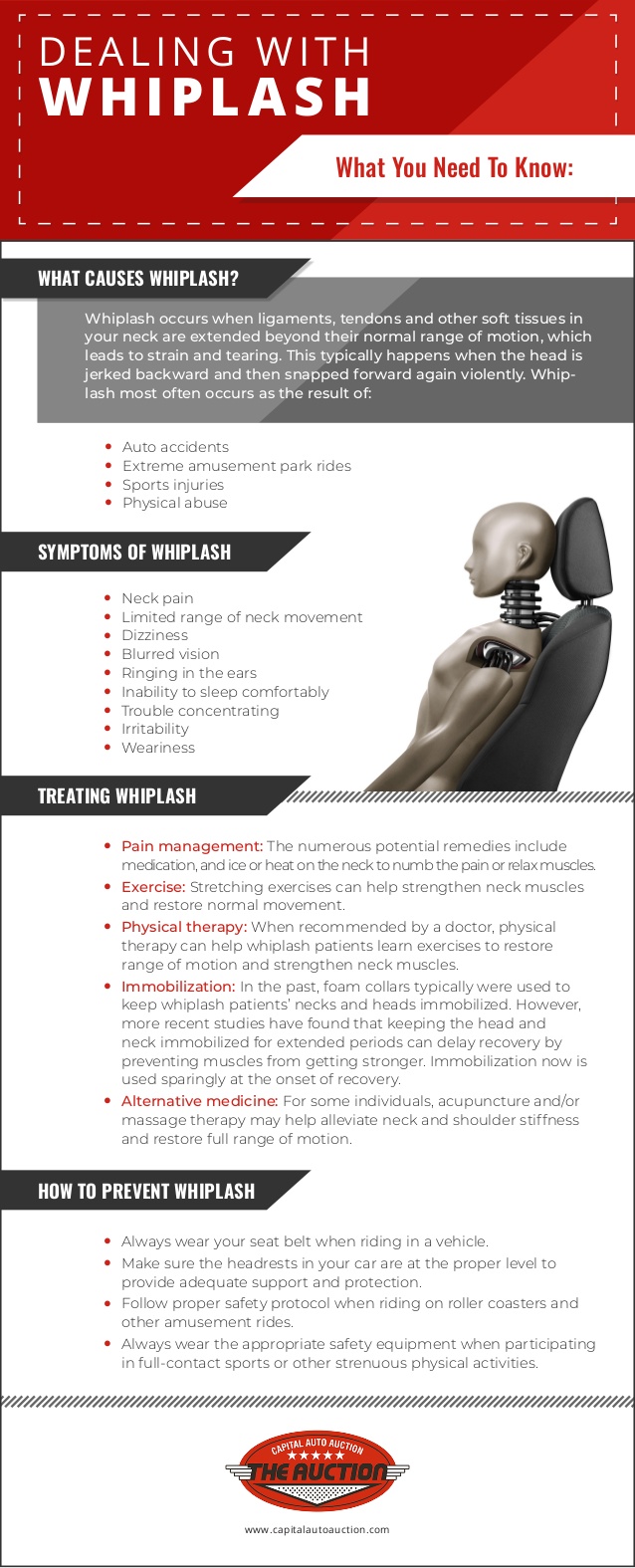
Infographic
Watch for Symptoms That Need Immediate Care
Certain symptoms require urgent medical evaluation. Severe neck pain, weakness in the arms or legs, numbness, difficulty walking, loss of bladder or bowel control, or significant changes in vision or speech may indicate a more serious injury.
People involved in high-speed crashes or major accidents should always follow emergency responders’ instructions. Communities occasionally replace older emergency vehicles through programs such as an ambulance for auction, but regardless of the equipment involved, prompt emergency assessment remains essential after significant collisions.
Support Long-Term Neck Health
Although many people recover within a few weeks, some continue experiencing pain or stiffness for several months. Maintaining good posture while working, taking breaks during extended computer use, and performing recommended stretching exercises can help reduce strain on the neck during recovery.
Regular follow-up appointments allow healthcare providers to monitor progress and adjust treatment if symptoms persist. Returning to work, sports, or physically demanding activities should follow medical guidance to reduce the risk of reinjury.
Whiplash is often treatable with early care, appropriate rehabilitation, and patience throughout the healing process. Recognizing symptoms quickly, seeking a professional evaluation, and following a structured recovery plan can help improve comfort, restore normal movement, and support long-term neck health. Look over the infographic below for more information.
Author Bio:
Reid Zaritsky is Senior Vice President of Capital Auto Auction, a family-run business since 1988 that focuses on finding the right vehicles for families of all sizes. Zaritsky has been with the company since 2009, and has a background in science and engineering.