Why Ambient Listening Is Far More Than Just Another AI Integration in Healthcare


For years, the promise of digital health felt like a bait-and-switch. We were told that Electronic Health Records (EHR) would streamline our workflows, make data accessible, and revolutionize patient care. Instead, they built a digital wall between physicians and the human beings sitting on the examination table.
As a medical doctor who also writes code and designs software, I look at healthcare through a dual lens. I know the visceral exhaustion of finishing a 10-hour shift only to face two hours of charting. I also understand the underlying architecture of the technologies trying to fix it.
When people hear about "Ambient Listening AI" in clinics, they often mistake it for a glorified version of speech-to-text-a slightly smarter Siri or Alexa transcribing a conversation.
But that view misses the point entirely. Ambient AI is not just another integration or a shiny new API slapped onto an existing EHR system. It represents a fundamental shift in how human data is captured, processed, and utilized at the point of care. It is an architectural rewriting of clinical workflow that restores the diagnostic relationship.
1- The Anatomy of Ambient Intelligence: Beyond Simple Dictation
To understand why clinics must adapt to this technology, we have to look past the marketing fluff and examine what is actually happening under the hood. Traditional dictation requires a cognitive pivot. A doctor must stop, think in a structured medical format (like an SOAP note), and speak into a microphone using explicit punctuation and formatting commands.
Ambient AI functions completely differently. It relies on a multi-stage software pipeline that operates silently in the background during a natural, fluid conversation.
 Hamza Musa
Acoustic Diarization: The system captures an unstructured room audio feed and instantly separates the speakers. It maps who is the clinician, who is the patient, and who might be a family member in the room.
Asynchronous Speech-to-Text (STT): High-fidelity acoustic models convert raw audio waves into a raw text stream, handling medical terminology, regional accents, and overlapping speech patterns.
Natural Language Processing & LLM Parsing: This is where the magic happens. A Large Language Model (LLM) or specialized clinical transformer analyzes the raw transcript. It extracts relevant clinical facts, discards small talk about the weather or local sports, and maps the clinical concepts into standard medical documentation schemas.
Moving from Transcription to Contextual Parsing
A standard dictation tool records exactly what you say. An ambient listening platform extracts the intent of what was said.
If a patient says, "Yeah, my chest has been feeling heavy, kind of like an elephant sitting on it, especially when I walk up the hill to get my mail, but it stops when I sit down," the ambient system doesn't just copy those words. Its clinical intelligence layer parses that sentence, recognizes the classic presentation of stable angina, and translates it into a structured, professional history of present illness (HPI). It transforms messy human dialogue into actionable medical prose.
 Hamza Musa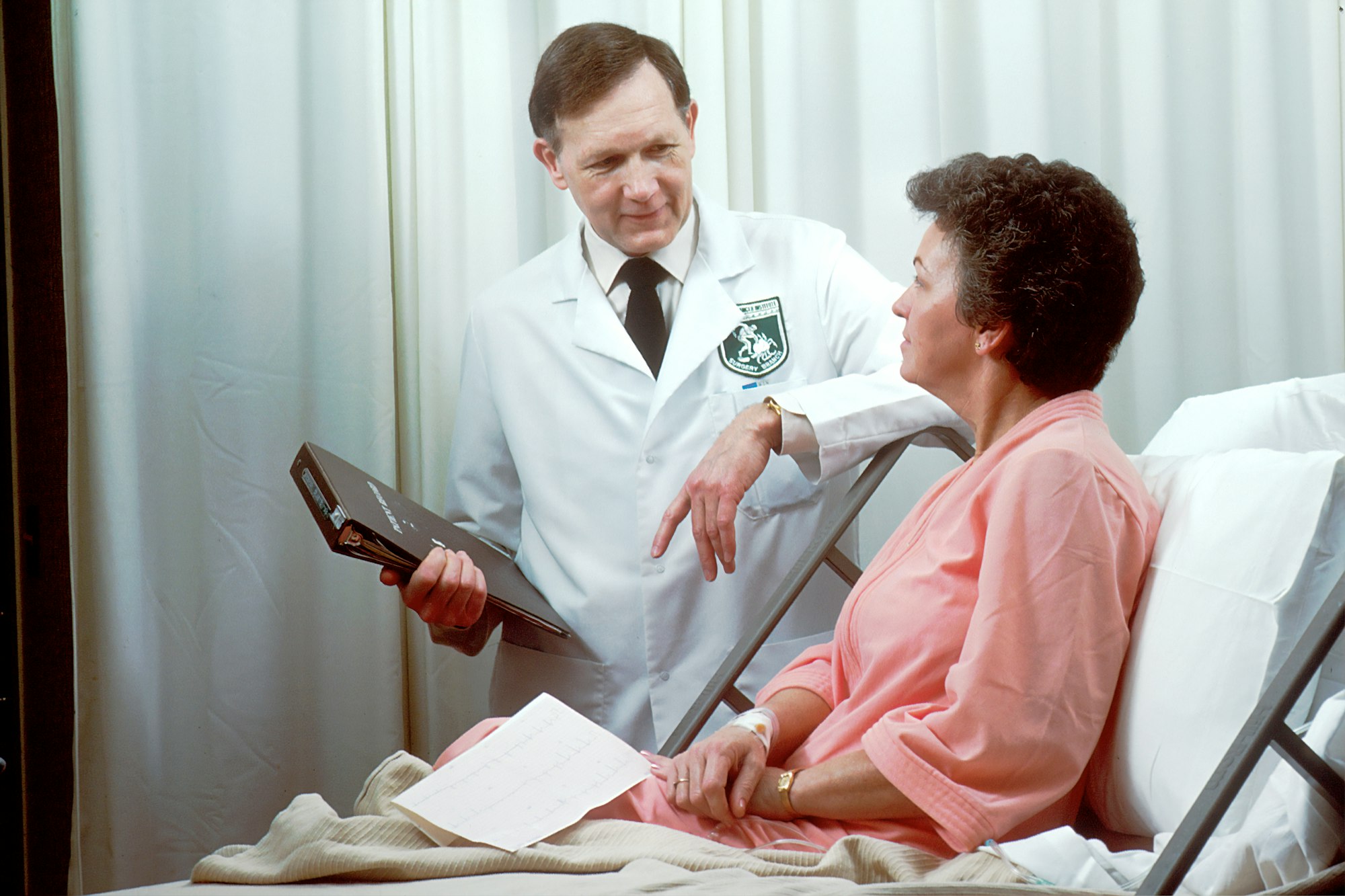
2- Breaking the Digital Wall: Healing the Patient-Physician Dynamic
When you walk into a modern clinic, what do you see? A doctor staring at a glowing monitor, typing furiously while the patient speaks to the back of their head. We have traded eye contact for data entry.
Restoring the Sacred Art of the Medical Interview
Medicine is an art of observation. A patient's body language, a subtle grimace when they shift their weight, or the hesitation in their voice when discussing a symptom often tell a deeper story than their explicit words. When a physician is forced to act as a data entry clerk during a consultation, those vital clinical cues are lost.
Ambient AI Workflow:
[Patient & Doctor Talk Naturally] ──> [Ambient System Listens] ──> [Real-time Eye Contact & Observation]
By allowing an ambient system to handle the documentation backend, the smartphone or tablet can sit face-down on the desk. The doctor can sit face-to-face with the patient. This psychological shift changes the entire diagnostic dynamic. Patients feel heard, validated, and safer, which directly increases their willingness to share sensitive, critical health data.
Reducing Cognitive Load and Clinical Burnout
Burnout in our profession isn't caused by the clinical care; it's caused by the administrative tax. Studies consistently show that for every hour of direct patient care, physicians spend up to two hours on administrative work.
As a developer, I see this as a classic system optimization failure. We are taking highly trained human neural networks-doctors who have spent a decade learning diagnostic logic-and using their processing power to click checkboxes and format text fields. Ambient listening automates the lowest-value, highest-friction task (typing), freeing up cognitive bandwidth for the highest-value task: clinical reasoning.
The Developer's Perspective: Why Integration Is Easier Than You Think
Many clinical administrators hesitate to adopt ambient AI because they are scarred from past EHR migrations. They expect months of downtime, complex software integration cycles, and heavy resistance from their IT departments.
But from an engineering standpoint, modern ambient platforms are built to minimize integration friction.
Decoupled Architecture and API-Driven Workflows
Most cutting-edge ambient solutions do not require deep, invasive alterations to your core database schema. They operate as decoupled, cloud-native applications or lightweight wrappers that sit alongside the EHR.
The system captures audio on a local client (like a mobile app), processes it via secure cloud endpoints, formats the output into standard HL7 or FHIR-compliant markdown or text blocks, and drops it straight into the EHR's documentation buffer. The doctor simply reviews, edits if necessary, and signs off. The implementation curve is remarkably flat compared to legacy enterprise software.
The Security, Privacy, and HIPAA Reality
Our first question is always: What happens to the data? In healthcare, data security is non-negotiable. Modern enterprise-grade ambient listening tools do not store raw audio recordings long-term. The pipeline is designed around ephemeral processing:
The audio stream is encrypted in transit using AES-256 protocols.
It is parsed by the LLM in a secure, isolated tenant environment that complies with HIPAA guidelines.
Once the structured clinical text is generated and sent to the EHR, the audio file is instantly purged from the system.
There is no permanent voice database sitting around waiting to be breached, which provides peace of mind for both compliance officers and patients.
The Financial Case for Clinics: ROI and Operational Efficiency
Medicine is a calling, but running a clinic is an operational reality. If an integration does not make financial or structural sense, adoption will stall. Fortunately, the Return on Investment (ROI) for ambient listening is immediate and mathematically undeniable.
Increasing Patient Throughput Without Rushing Care
When charting time drops from fifteen minutes per patient to two minutes of quick verification, a clinic naturally reclaims hours of lost time every single day.
| Metric | Traditional Workflow | Ambient AI Workflow | Impact |
| Average Charting Time | 10-15 minutes per encounter | 1-2 minutes (Review only) | ~85% reduction in document drag |
| Daily Time Reclaimed | 0 hours | 1.5-2 hours per physician | Reclaimed for family or extra appointments |
| Documentation Backlog | "Pyjama time" (charting at home) | Completed before leaving the exam room | Drastic reduction in clinical burnout |
If a clinic chooses to use even half of that reclaimed time to see new patients, throughput increases without adding stress to the provider. The technology pays for itself within the first few weeks of deployment.
A major pain & pressure point in healthcare revenue cycles is incomplete or delayed documentation. If a doctor writes their note twelve hours after seeing a patient, they inevitably forget specific details, comorbidities, or subtle procedural components. This leads to under-coding, rejected claims, and lost revenue.
Because ambient listening generates a highly accurate, fully detailed note within minutes of the encounter, the clinical record is exceptionally rich. It captures hierarchical condition categories (HCC) and discrete symptoms that a tired physician might overlook when charting late at night. The result is more accurate billing, fewer insurance denials, and cleaner audits.
Conclusion: The New Baseline of Modern Medicine
We are standing at a unique crossroads in clinical technology. Ambient listening is not just a feature update; it is an epochal shift. It is the first time AI has entered the clinic not to demand more inputs, but to take a heavy burden away from the provider.
For clinics deciding whether to adapt, the choice is no longer about being an early adopter. It is about operational survival. The clinics that integrate ambient intelligence will retain their staff, protect their bottom line, and offer an undeniably superior patient experience. The clinics that stick to keyboards will simply burn out.
As a physician, I want my focus on the human being in front of me. As a developer, I want systems that work cleanly and quietly in the background to make that possible. Ambient AI is the exact bridge we've been waiting for.
What do you think?
Would you like me to tailor this draft toward specific technical integrations (like Epic/Cerner API hooks) or dive deeper into the exact prompting frameworks used to build clinical LLM notes?